Guides › Tires
Best Tires: All-Season vs Winter vs All-Terrain
The right tires keep you safe in rain, snow, and heat. Here's how to choose for where and how you drive.
I may earn a small commission if you buy through links on this page, at no extra cost to you.
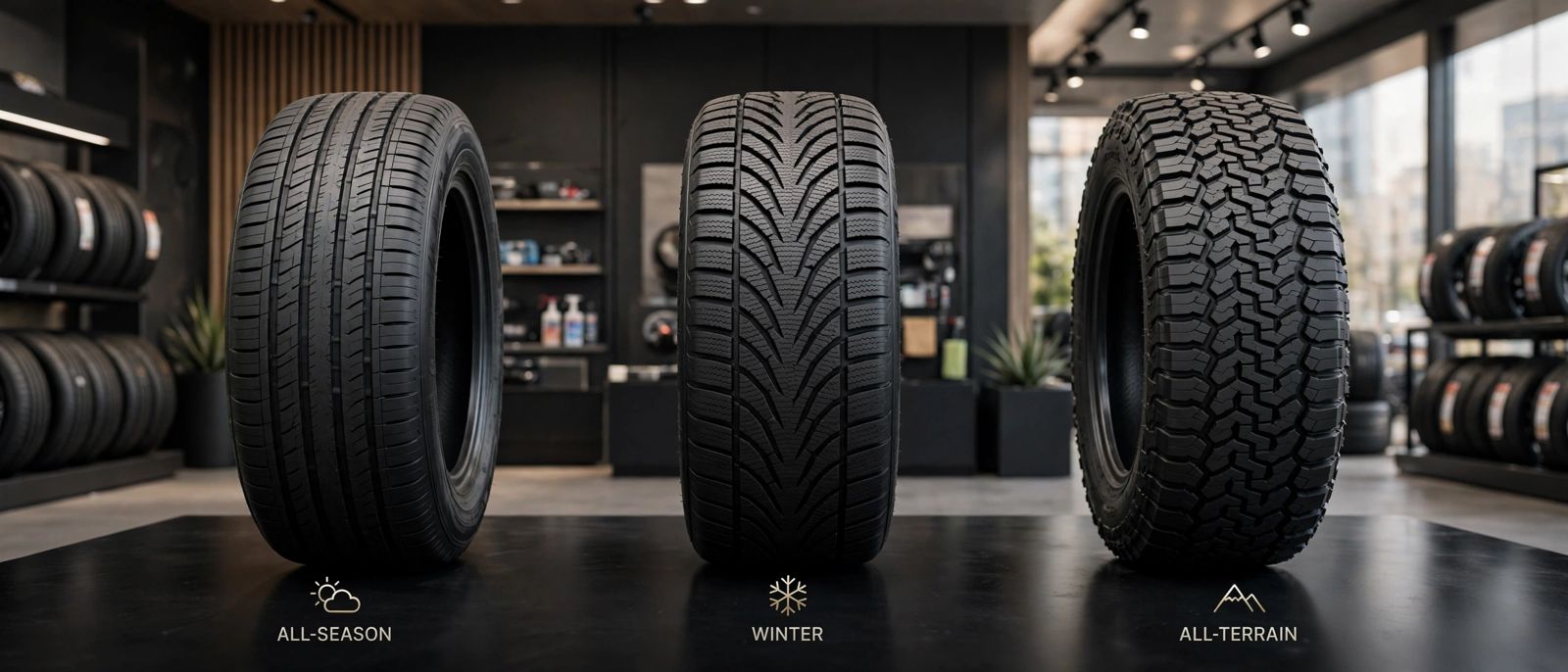
#1 Best overall: all-season tires
Top pickOne set for most of the year. A good balance for mild winters.
Key trade-off: decent everywhere, but not as good as winter tires in heavy snow.
#2 Best for snow: winter tires
Special rubber and tread grip much better on snow and ice.
Key trade-off: much safer in winter, but you need a second set.
#3 For trucks and SUVs: all-terrain tires
Good on dirt roads and light off-road trails, and fine on the highway.
Key trade-off: tough and versatile, but louder on the road.
Before you buy
- Find your tire size on the side of your tire (like 215/55R17).
- Check tire pressure once a month.
- Replace tires when the tread is worn down.
DIY: How to check your tires
Safety first: Mounting new tires needs special machines, so let a tire shop install them. But checking your tires yourself keeps you safe and helps them last longer.
- Find the right pressure on the sticker inside the driver's door (not the number on the tire itself).
- Check pressure when tires are cold, before driving or after the car has been parked for a few hours.
- Add or let out air until each tire matches the door sticker.
- Do the penny test. Put a penny in the tread with Lincoln's head upside down. If you can see all of his head, the tread is too low.
- Look for damage, like cracks, bulges, or nails in the tread.
- Rotate your tires about every 5,000 to 7,500 miles, or as your owner's manual says, so they wear evenly.
Ready to do it yourself?